Professional supervision is a reflective practice for people who hold responsibility for others. It offers a confidential and non-judgmental space to consider what your role is asking of you, and what it is costing.
The word "supervision" is worth a moment, because it is easily misheard. It comes from the Latin super, meaning over or above, and videre, to see. It does not describe someone standing over you as a superior. It describes the wider view: stepping back from the immediate in order to see the whole picture from a different height. My part is to help you gain that perspective, and to support you in what you find there.
This reflective practice takes place in regular, guided conversations, one to one. They give you room to look at the whole: the decisions you have taken, the people you lead, the pressures acting on you, and the person you are becoming in the middle of it. The aim is to support both your own wellbeing and the integrity of your role.
Supervision sits alongside what the Battalion already provides and replaces none of it. It is not a chain of command conversation. It is not the Welfare Office, and it does not manage cases. It is not TRiM, and it is not a medical or mental health service.
It is also distinct from the spiritual, pastoral, and moral support I offer as your Padre, and the difference is worth being clear about. Those three are about you: the questions of meaning, the hard thing you are carrying, the decision you are wrestling with. They are there when you need them and you do not book them in advance. Supervision is about your work: the role you hold, the judgements you make in it, and what holding it does to you. It happens at regular intervals whether or not anything has gone wrong, and in that hour I am not acting as your Padre but as your supervisor. I am fully qualified in professional supervision and a member of APSE, the professional body for supervisors, and I work to its professional and ethical standards.
The hour belongs to you and to your role: time set aside to think clearly about your work with someone whose only task in that hour is to help you do so.
Professional supervision weaves together three interconnected dimensions: normative, formative, and restorative.
Command is a demanding trade, and most of what makes it demanding is invisible from outside. You are answerable for the output of your sub-unit and for the people who produce it at the same time. You take decisions on incomplete information and live with them afterwards. You hold standards you did not set, absorb pressure from above, and pass on as little of it as you can to those below. And somewhere in the middle of all that, the G1 lands: the debt, the breakdown at home, the bereavement, the thing a soldier has told nobody else. You deal with it and you get on with the day.
Done well, that is one of the finest things about the profession. But it accumulates. It does not arrive at convenient intervals, it rarely resolves cleanly, and the cost of carrying it is easy to miss, both in yourself and in the people who work for you. Left unattended it tends to show up as tiredness that sleep does not fix, a shorter fuse, a growing cynicism about the people around you, or a quiet decision to stop taking anything in at all. Moral injury, compassion fatigue, and burnout are not signs of weak leadership. They are occupational hazards of leading people well over time.
Professional supervision is a way of getting ahead of that. It can offer perspective on the situation that has been going round in your head, renewed clarity about your role, and a better understanding of your own reactions. Over time it builds the kind of durability that lets you stay fully present to your soldiers across a career, and not just a tour.
This programme has been established by the Commanding Officer, who wants those carrying responsibility in the Battalion to be properly supported in doing so, and to have time set aside for their own development and wellbeing.
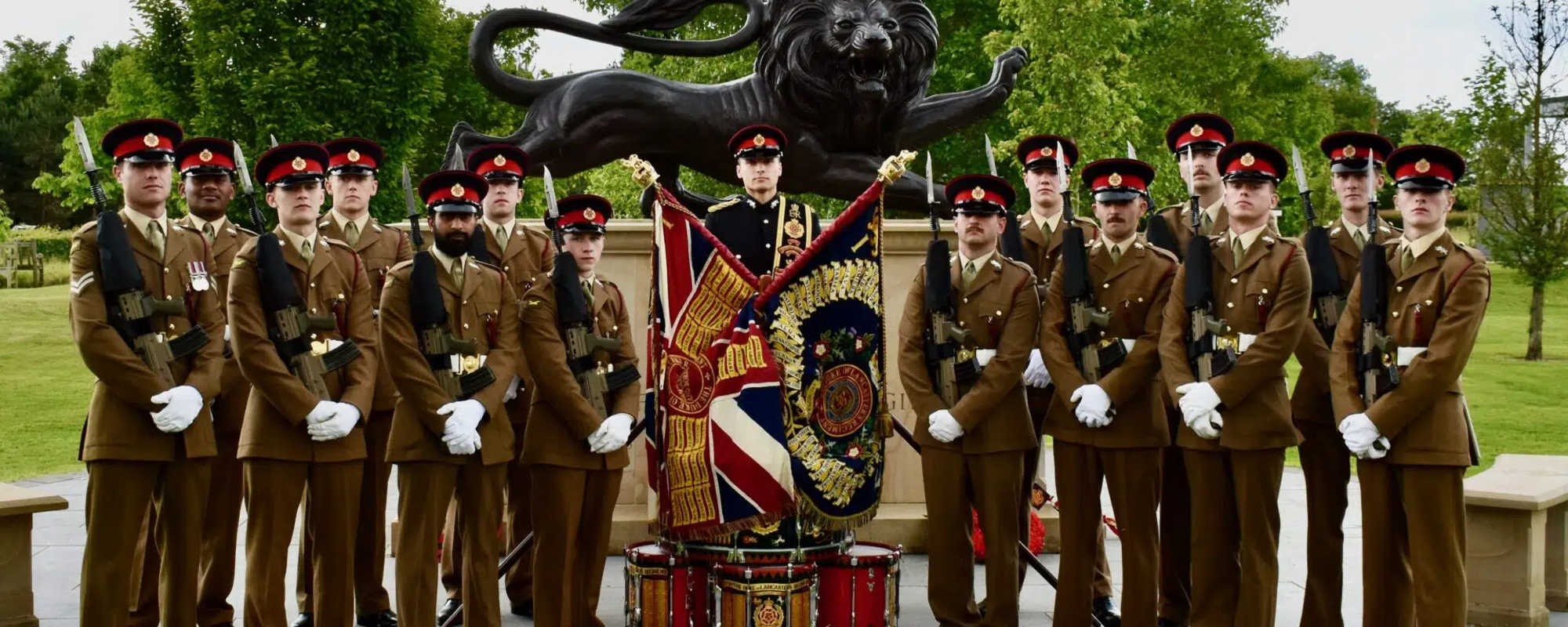
It is for the officers and senior non-commissioned officers of the 1st Battalion, The Duke of Lancaster's Regiment: those who hold responsibility for the soldiers under their command.
Supervision does not depend on there being a problem to solve. It is as useful for thinking through a decision you are uncertain about, or a working relationship that has become difficult, as it is for a situation that has genuinely gone wrong.
Please prepare beforehand. A session you have thought about in advance is worth considerably more than one you walk into cold.
Before we meet, consider:
Preparation is not about having answers or arriving with a solved problem. It is about noticing what is asking for attention. There is no need to perform or present a polished case — please come as you are.
To make professional supervision accessible and effective, here are the key practical details you should know:
Supervision is not an assessment, and it is not a test of your resilience. It is simply an hour in which someone walks alongside you, so that you can go on doing a demanding job with insight and integrity — and so that the soldiers you lead get the version of you that you would want them to have.